




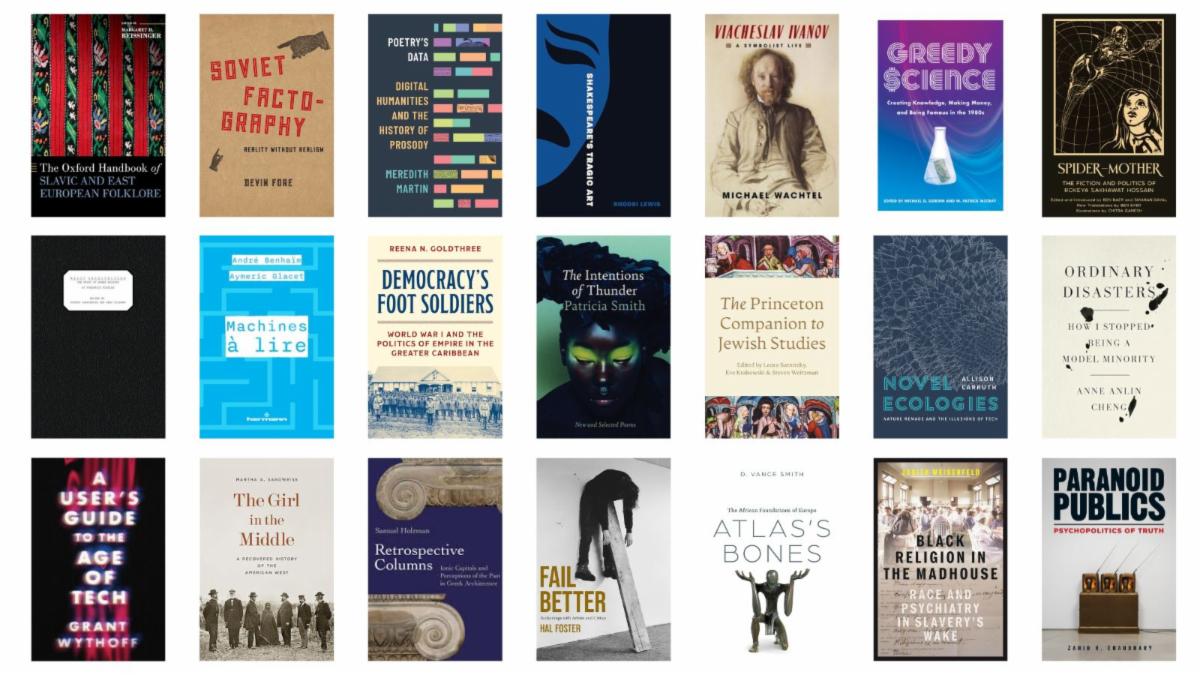
The Humanities Council’s Faculty Bookshelf offers a window into the latest scholarship emerging from Princeton’s humanities community.
Explore the bookshelf for recent and forthcoming publications that capture the depth and vitality of research and innovative ideas across the University’s humanities departments, programs, and centers. The virtual stacks also feature Q&As from faculty authors who reflect on their research methods, the impact of their work, and the questions that drive their thinking.
Do you want to add a book to the shelf? Faculty from across the University’s humanities disciplines are encouraged to submit new publications to the searchable digital platform.
Visit the Faculty Bookshelf on the Humanities Council website.
Recent Faculty Q&A Highlights
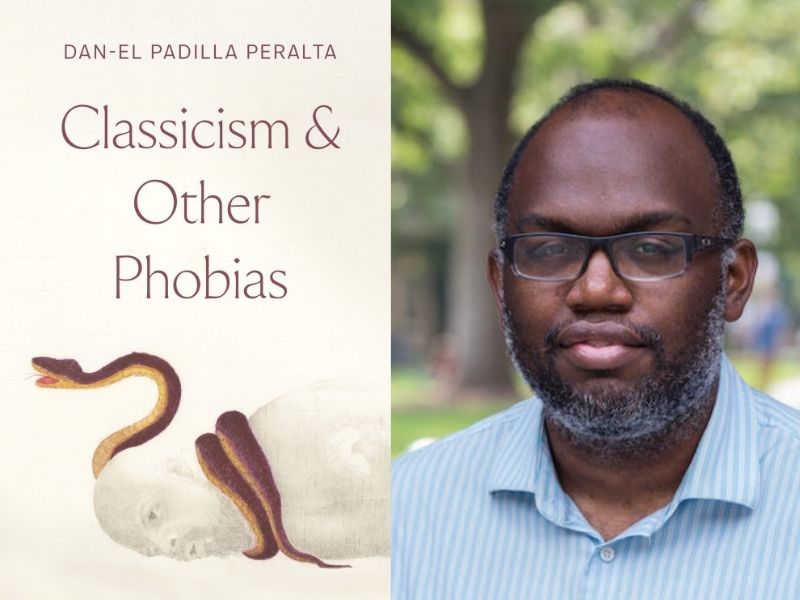
“As I wrote, some ideas that had been trailing my earlier publications on the discipline of classics and the experiences of its minoritized practitioners fell into place: the urgency of striving for an “oppositional consciousness” that attends equally to the pasts and presents of the institutionalized study of the ancient world; the undervaluation of Caribbean and other Afro-diasporic knowledges as a direct function of Greco-Roman antiquity’s imperial overrepresentation; the desirability but also limitations of alternative classicisms; and the vitality of pursuing a practice of ancient studies that does more than pay citational lip service to Black study.” – Dan-el Padilla Peralta on ‘Classicism and Other Phobias’

“I felt compelled to write a book that unpacks how exploitation is reframed as care, how abuse is mistaken for benevolence, and how employers can be blind to their own oppressive actions. My book confronts this dangerous distortion and reveals how easily systems of abuse become normalized, justified, and even seen as acts of kindness.” – Rhacel Salazar Parreñas on ‘The Trafficker Next Door’

“I hope that by making explicit how I investigated the changing semantic functioning of words like “fascism” my book may help sensitize the readers on how the means of linguistic production are (must be) collectively own: every speech act has the potential of affecting the way language regulate society and the world. Language is not just a means: it is the very condition of our existence as individuals in society and in the world.”
– Federico Marcon on ‘Fascism: The History of a Word’
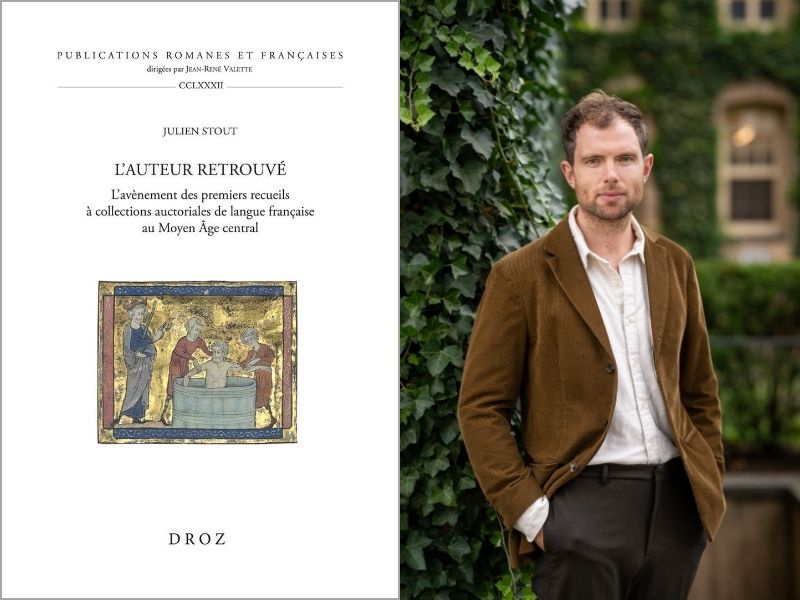
“This book is intended primarily for medievalists seeking to challenge established assumptions about vernacular authorship and to reconsider the specificity of the “birth of the French author” within broader medieval conversations on authorship. It also speaks to readers interested in the longer history of authorship—those wishing to approach contemporary debates on copyright, generative AI, or the #MeToo movement surrounding writers and directors from a different perspective” – Julien Stout on ‘L’auteur retrouvé’
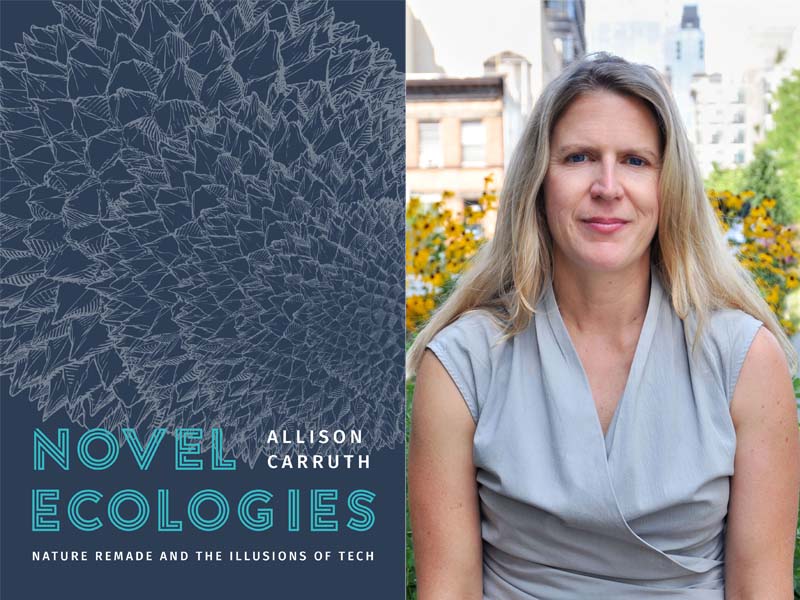
“Through three case studies—synthetic wildlife, the digital cloud and space colonization—the book challenges the conviction that climate change and other environmental crises must be met with planetary-scale technological intervention.” – Allison Carruth on “Novel Ecologies”
“The idea (the guiding principle) was to surprise the audience with what amounted to conversation-like presentations where we blended our voices and our texts to create polyphonic readings of a number of authors (but also film makers, composers, etc.) around a common theme.” – André Benhaïm on “Machines à lire”
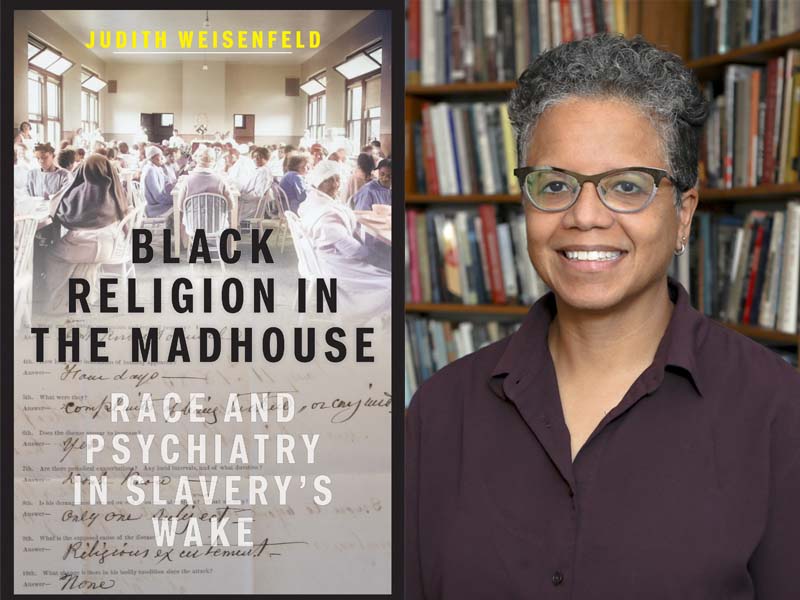
“In foregrounding race and religion in the history of early American psychiatry, the book adds to the literature on medical racism that has been critical for understanding the origins and sources of disparate treatment and patient outcomes in a variety of areas.”
– Judith Weisenfeld on “Black Religion in the Madhouse”
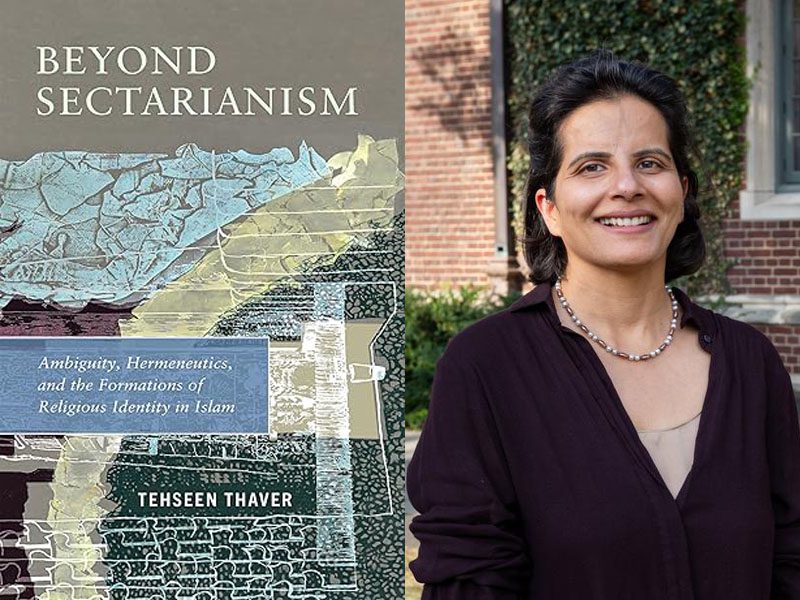
“The field of Qur’anic Studies within the study of Islam and religion tends to be highly specialized and inward looking. I wanted to write a book that situates the study of the Qur’an squarely within the study of the humanities, and in fact attempts a substantive conversation between the ‘Western’ and Muslim humanities.” – Tehseen Thaver on “Beyond Sectarianism”
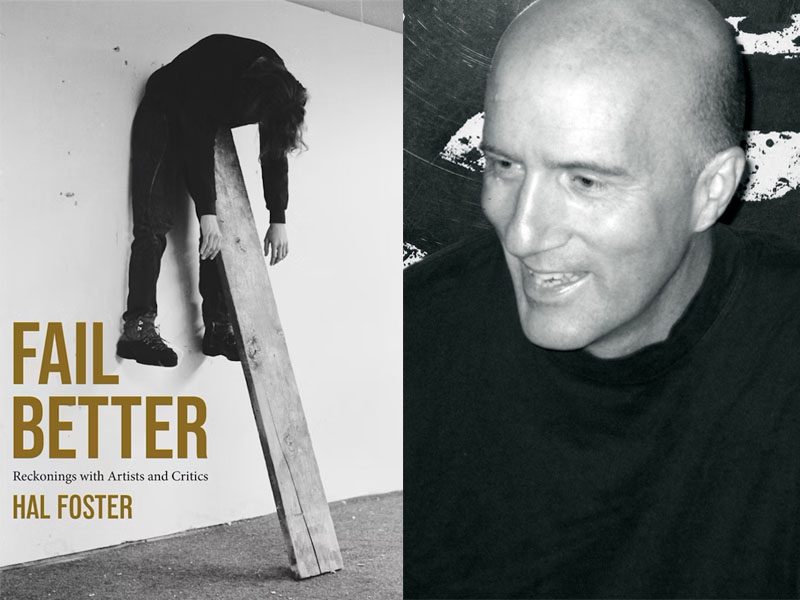
“Who doesn’t want to fail better?…This is a book of essays, and essays are only attempts, more or less failed. Critics fail in the sense that they can only offer a limited reading of an art practice, and artists fail in the sense that they can never resolve the contradictions that prompt them to make art in the first place.” – Hal Foster on “Fail Better”
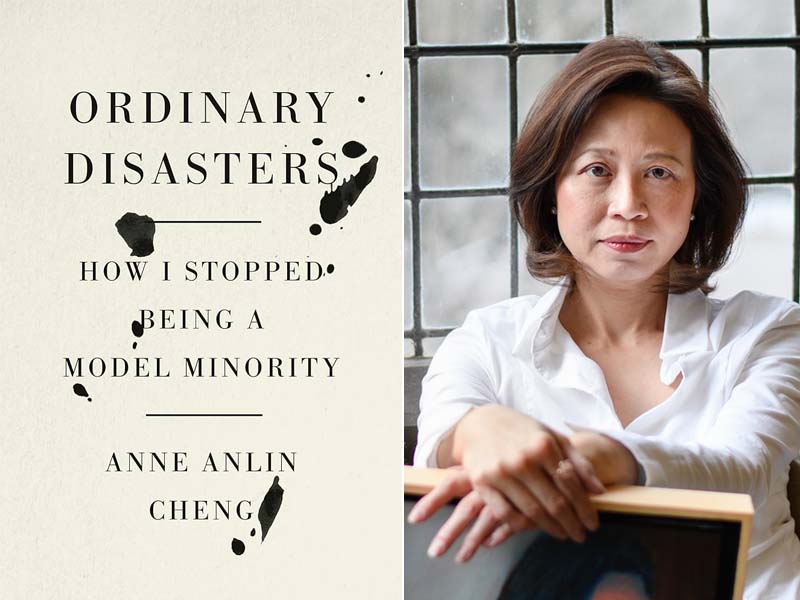
“The book speaks directly to Asians in America, but it also speaks to anyone who finds themselves estranged from the people they love the most, who felt the schism between who they are seen as and who they are, and who discovers that what have made them successful their whole life may have exacted profound, invisible costs.” – Anne Anlin Cheng on “Ordinary Disasters”

“I spent several years researching the book using Russian archives, and my perception of the composer’s achievement evolved. [Tchaikovsky] had access to the highest rungs of power in Russia yet wasn’t particularly political. The research changed altogether my understanding – our understanding – of the conception of major operas and ballets.” – Simon Morrison on “Tchaikovsky’s Empire”
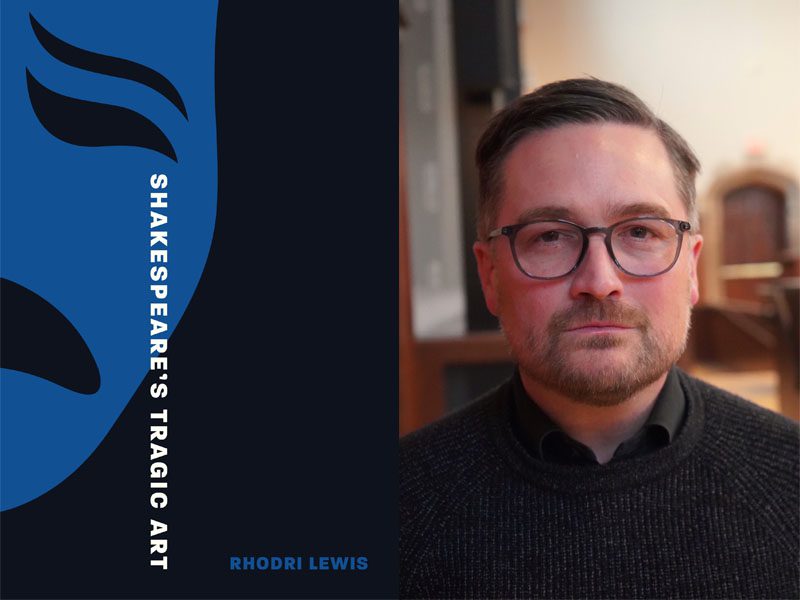
“As I wrote, I saw much more clearly that it was the struggle for new forms of aesthetic order—the struggle, that is, to push tragedy to its absolute limits in representing a world that defies rational comprehension—that really motivated Shakespeare’s tragic work.” – Rhodri Lewis on “Shakespeare’s Tragic Art”
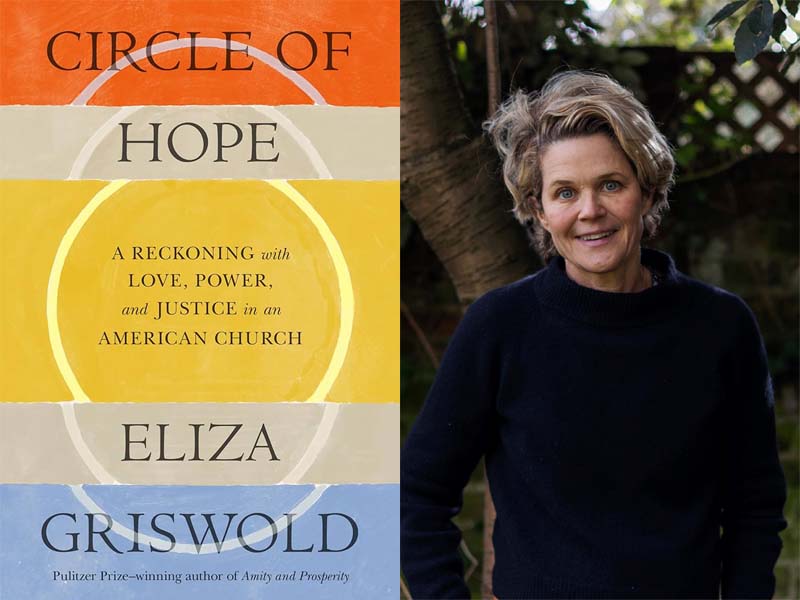
“I wrote this book because I wanted to make sure that, in the American religious landscape, we understood that evangelicalism isn’t a monolith…I think people should read the book if they are seriously engaged in questions of meaning, or if they are investigating their own religious or spiritual beliefs, because the book is designed for seekers.” – Eliza Griswold on “Circle of Hope”