



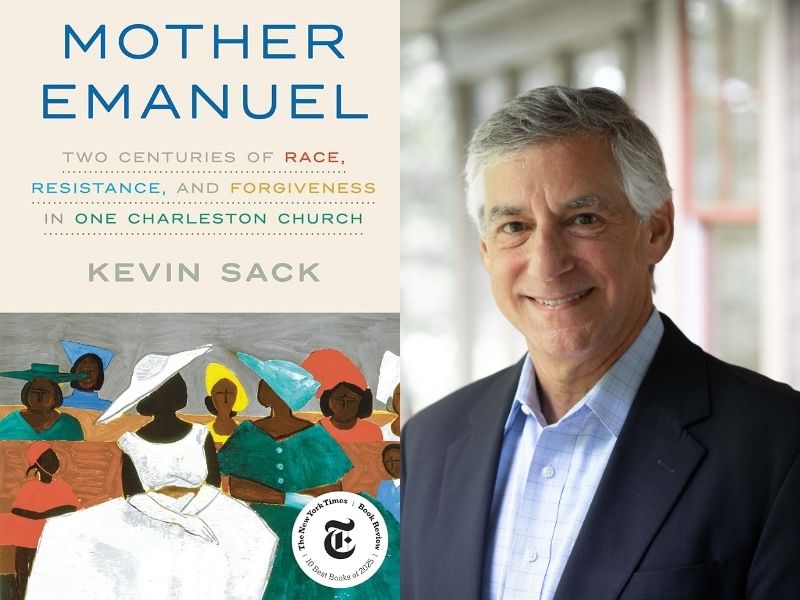
Kevin Sack is a Visiting Lecturer in the Humanities Council and Spring 2026 Ferris Professor in the Program in Journalism. His book, “Mother Emanuel: Two Centuries of Race, Resistance, and Forgiveness in One Charleston Church” was published in June 2026 by Crown Publishing.
How did you get the idea for this project?
When the white supremacist massacre happened at Mother Emanuel in June 2015, I became fascinated by the backstory of what had been the oldest African Methodist Episcopal congregation in the South. Its history was so rich that I felt it should not be forever remembered for only its lowest moment, and that the nation should understand why it had mattered so much that the shootings happened where they did.
As I began to report on the aftermath for The New York Times, I grew convinced that the church could be used as a vehicle to tell a much broader story of African American life in Charleston, the place perhaps most critical to understanding America’s racial narrative, and to do so over an extended period of time.
How did the project develop or change throughout the research and writing process?
What began as a historical exploration evolved into a theological one as well. Only days after their loved ones had been slaughtered at Emanuel, several family members of the victims publicly forgave the unrepentant white supremacist mass murderer. Like so many of us, I was simultaneously awestruck and befuddled by what seemed the purest Christian act we had ever witnessed. I wanted to understand more about the spiritual roots of forgiveness, and what it really meant in the context of Black suffering and the Black church. I began to find answers within the very history I was already studying.
What questions for future investigation has the project sparked?
No institution has been more central to racial progress in this country than the Black church. With Americans turning away from organized religion, and Black congregations facing particular pressures caused by gentrification and social conservatism, many African American churches are struggling merely to survive, much less thrive as bulwarks against injustice. The Black Lives Matter demonstrations of 2020 rose from the streets and from social media, not from the pews. What happens to civil rights activism when the church is diminished?
Why should people read this book?
I could not have forecast the political environment into which this book would be born, but I do hope readers see it and books like it as antidotes to the accelerating assault on actual American history that we see coming from Washington and many state capitals. Only when we recognize that even our country’s most inglorious chapters are part of our shared history, no matter who our people are or when they got here, can we make headway against the demonic forces of white supremacy and racial degradation. Efforts to whitewash that history reveal weakness and insecurity, not an imagined past greatness.
Learn more about other publications by Princeton University faculty in the humanities by exploring our Faculty Bookshelf.