



By Mary Cate Connors, Humanities Council
A women’s shelter in downtown Athens, Greece, abruptly shut its doors, forcing 30 migrant women and children onto the streets. In a nearby suburb, a team of scrappy volunteer firefighters battle intensifying wildfires on a shrinking budget. On the island of Paros, a fight over water pits farmers against tourists as climate change wreaks havoc on coastal communities.
These stories – rich, essential, and as complex and layered as modern Greece – are just a few of those reported by ten Princeton undergraduates as part of an intensive journalism seminar this past summer.
Co-taught by Pulitzer Prize-winning author Eliza Griswold and longtime international correspondent and cultural curator Rachel Donadio, the five-week course, “Shockwaves: Reporting on Climate, Migration, and Culture in Greece,” immersed students in the craft of international reporting as they examined pressing global issues shaping Greece and the wider world.
The course was sponsored by the Humanities Council’s Program in Journalism with additional support from the Seeger Center for Hellenic Studies.
“Greece is the perfect meeting place, at a crossroads between issues of migration, climate, and culture,” said Griswold, director of the Program in Journalism and professor of the practice.
Finding the story of the course
The idea for a reimagined seminar took shape in the fall of 2024, when Griswold approached Donadio about a potential collaboration. Donadio, the former Rome bureau chief and European cultural correspondent for The New York Times, had already done extensive reporting work in Greece and was serving as public programs advisor for an exhibition at the Acropolis Museum.
The pair began by digging into background research, connecting with sources on the ground, and lining up experts to serve as guest speakers.
“We treated the course [syllabus] as we would a story: What are the main themes and surprises? Where is the anecdotal lede? Where are the places in Greece that embody new ideas and how do those ideas fit into larger trends?” said Donadio. “Then, we put together the class like a newsroom.”
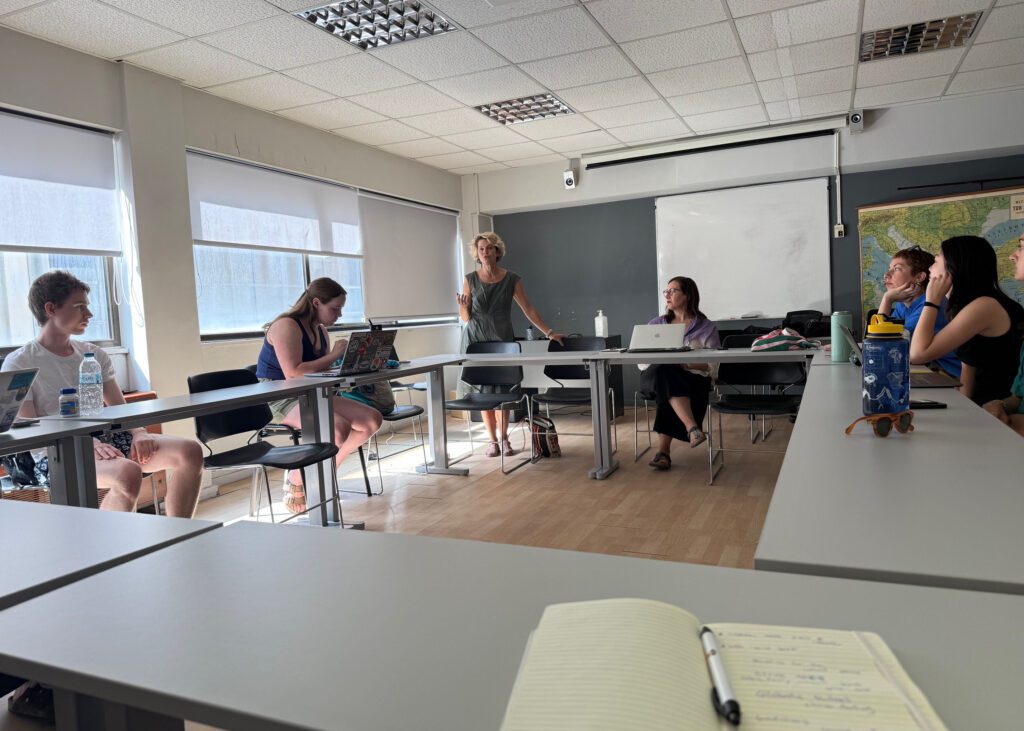
Griswold and Donadio recruited Valentini Anagnostopoulou, an experienced Athens-based journalist and TV producer, to serve as an on-the-ground partner and to help “find the story” of the course. Anagnostopoulou’s expertise in the field proved crucial to the seminar’s success, said Griswold and Donadio, connecting students with local sources, serving as a Greek translator, and assisting with reporting logistics in real time.
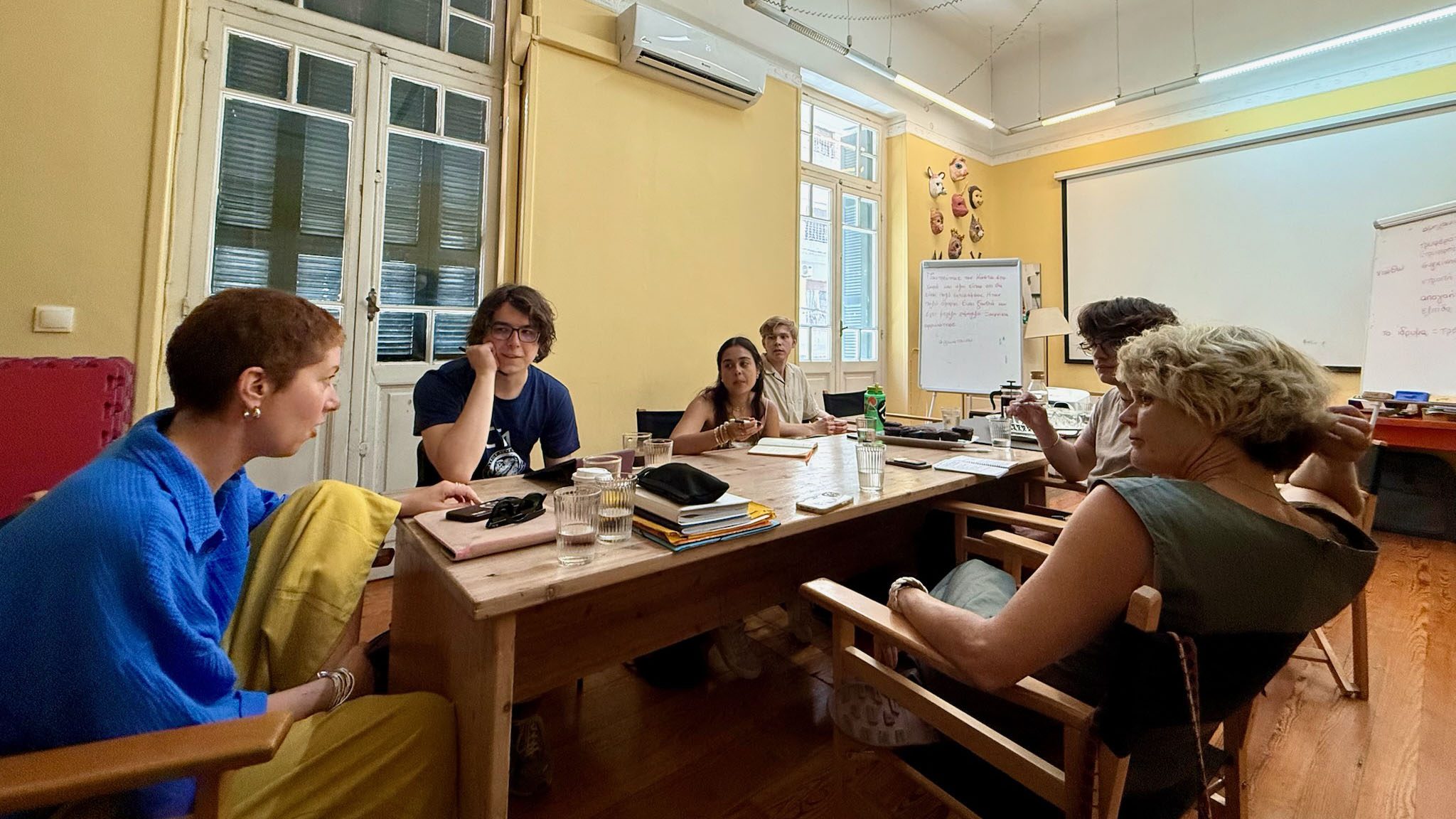
Together, the team mapped out an expansive pedagogical route – from the streets of Athens to rural farming and fishing villages in the Cyclades Islands of Naxos and Paros – allowing for students to experience the depth and variety of narratives the country has to offer. Classroom lectures on Greek economics, history, tourism, and culture were complemented by visits to nearby newsrooms and conversations with journalists, volunteers, refugees, government officials, and poets.
Annalisa Jenkins ’27, a Spanish major pursuing a minor in journalism, said the variety of opportunities to engage with others was a highlight of the course.
“Every day was jam-packed with experiences that I could not believe I was having as an undergrad,” she said. “I was talking with a classmate as early as week two, and we just couldn’t believe how incredible the class was, and all of the people we got to meet.”
Inverting the narratives
Donadio and Griswold challenged students to “invert conventional narratives” to avoid stereotypes in their storytelling.
“We don’t want to write exploitative narratives about trauma or migrants; those have been repeated many, many times,” said Griswold. “The idea that migration in Greece looks like people arriving by boats is, at this point in time, an oversimplification. So, our job as journalists is to get the story right, and that means reporting around the margins and into what is surprising.”
This directive led students to cover vibrant and vital human stories: about e-food delivery drivers on Naxos, cheesemakers and activists on Paros, and volunteers at a sea turtle rescue center in Glyfada. The group learned about disinformation at the ancient Oracle of Delphi, interviewed front-line workers at the Volunteer Forest Fire Rescue Team, and participated in a psychologist-led workshop with migrant families at Melissa Network, an organization for migrant and refugee women living in Greece.
Noah LaBelle ’28, a journalism minor who is majoring in the Princeton School of Public and International Affairs, said that the course philosophy taught him to approach his writing in a new way.
“I’ve just started looking for the most surprising or interesting dynamic of a place that I’ve been in, or a conversation I’ve had with people,” LaBelle said. “And then from there, it’s trying to get that level of surprise on the page and fleshing it out with what the facts of the situation and why it matters.”


All hours, all in
The fast-paced course was designed to help students gain real-world reporting experience as field journalists, which often meant linking up with each other in less conventional spaces. Impromptu editing sessions took place on bus and metro rides, stories were developed on walks between interviews, and office hours occurred everywhere but the office, including on Aegean ferries or in nearby cafes.


Griswold described the class as “journalism boot camp” – rigorous in the extreme. Students had near-constant access to their professors, who served as close mentors throughout the program. “Journalism at the highest level is a 24-hour-a-day job; reporting will take and benefit from everything you have to throw at it,” she said.
For LaBelle, this method was key. “I learned so much about what reporting actually looks like in the real world when you have subjects of massive scope,” he said. “Being able to actually fully immerse ourselves here was really instructive. Having lots of chances to ask questions, learn what sort of body language allows people to open up, it all gives you a better understanding of how to approach the work in the future.”
The undergraduate group, from across disciplines and class years, spent long hours reporting, writing, fact-checking, and filing stories on tight deadlines to the course blog. They navigated unexpected physical challenges – sunburns and seasickness – and contended with environmental ones – one of Greece’s hottest recorded summers – to find underreported stories about their host country.
“Working in difficult places – and I’d say in the heat of Greece is one of them, where you don’t know the language and you’re reporting on beaches and from boats – requires that you take care of yourself physically, and it requires stamina and willingness,” said Griswold. “To teach that in any other way misrepresents what the role and life of a journalist is really like.”
The course gave Isabella Dail ’26, a philosophy major pursuing minors in journalism and French, a new perspective on the profession.
“I think it was important to understand journalism beyond writing a lede and a nut graph – the work it takes going to new places, talking to people for several hours a day in the sun without breaks, and then trying to process it all into a piece for the next day,” she said. “The course taught me a lot about the challenges of professional journalism in a way you don’t ever experience in a controlled classroom environment at Princeton.”
The final assignment of the course asked students to pitch their 2,500-word collaborative final features to at least three news outlets. As of November 2025, two of the pieces have appeared in internationally recognized publications. A story by Valerio Castellini ’28, Mara DuBois ’27, Samuel Kennedy ’26 and LaBelle was published in The Guardian. Another, by Megan Cameron ’26, Maggie Stewart ’28, and Jenkins, was featured on The Nation’s StudentNation platform.
“The ambition for the class was that the final features would be publishable, that was the standard of work we had to do,” said Griswold. “And not only were they publishable, but some of them were published.”
Classmates as colleagues
Whether they were earning shared bylines for their collaborative stories or playing Double Solitaire after long reporting days, the student cohort learned to work together as a unit in Greece. Donadio likened it to an “immersive social experience,” as well as an academic one.
“Over the five weeks, our group really came together as friends, classmates, and professional colleagues,” said Dail. The group supported one another during the writing process – but also grabbed dinner together or helped each other with things like finding the pharmacy and navigating the Pangrati neighborhood. “We enjoyed each other’s company and also came to respect each other as reporters and writers – so that was really, really amazing.”
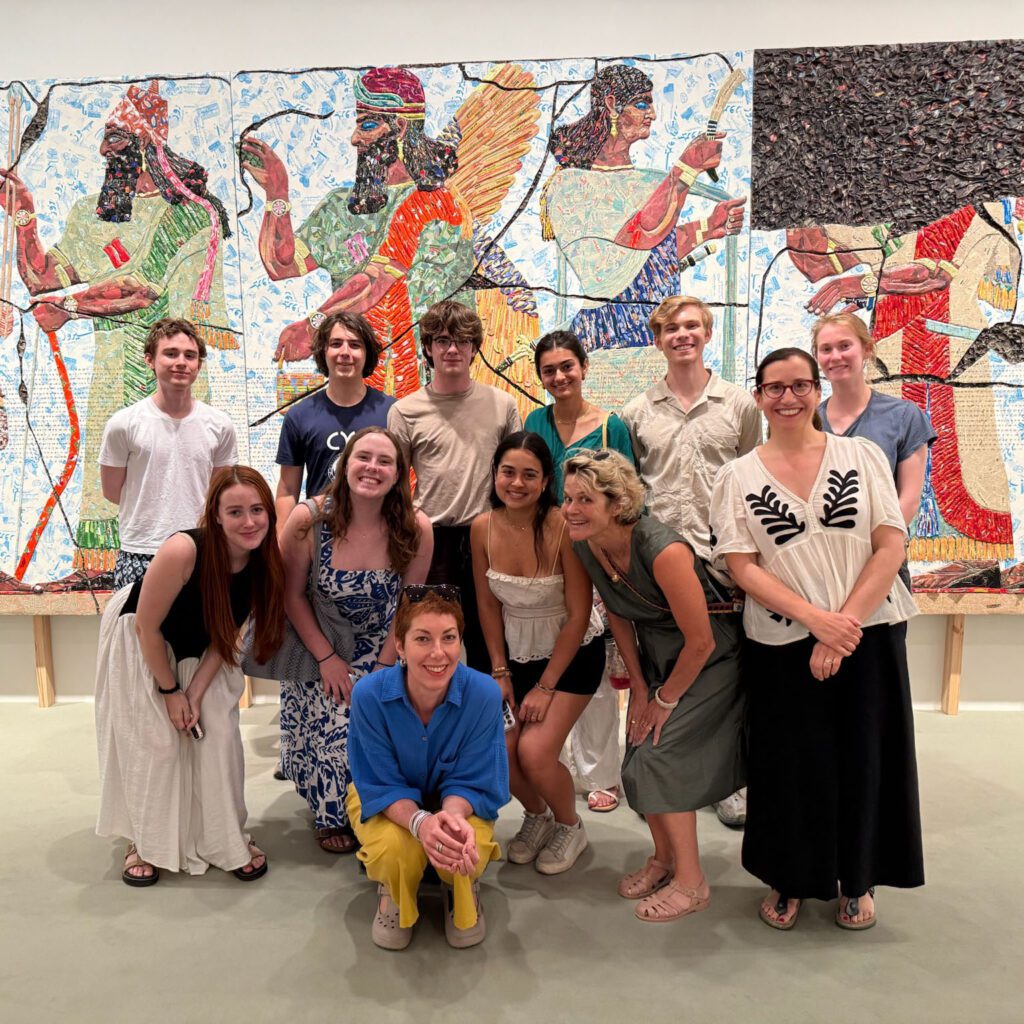

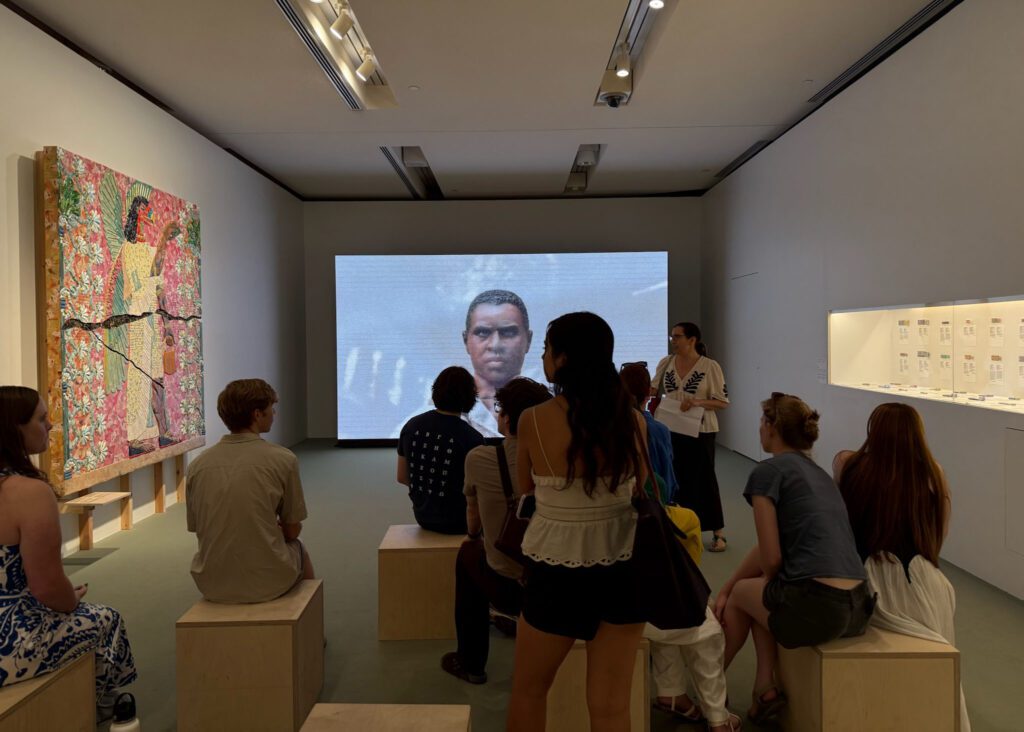
After more than a month in Athens and the surrounding areas, Donadio and Griswold hope the students left with a deeper understanding of interconnected issues like migration and climate – and an appreciation for the stories they found in Greece.
“I told the students on the first day of class that no country has tested me as a journalist more than Greece,” said Donadio. “And no country has given me as much deep satisfaction as the work I’ve done here. I hoped that the students would come to love Greece as much as I do. And I think they did.”
“Shockwaves: Reporting on Climate, Migration, and Culture in Greece,” will be offered again in Summer 2026. The application opens on Monday, December 15, 2025. Interested students are encouraged to attend an information session on Wednesday, December 10, 2025 to learn more about the program.