


The Stenographer’s Invisible Hand: How Speech Became Language in Modern Japan
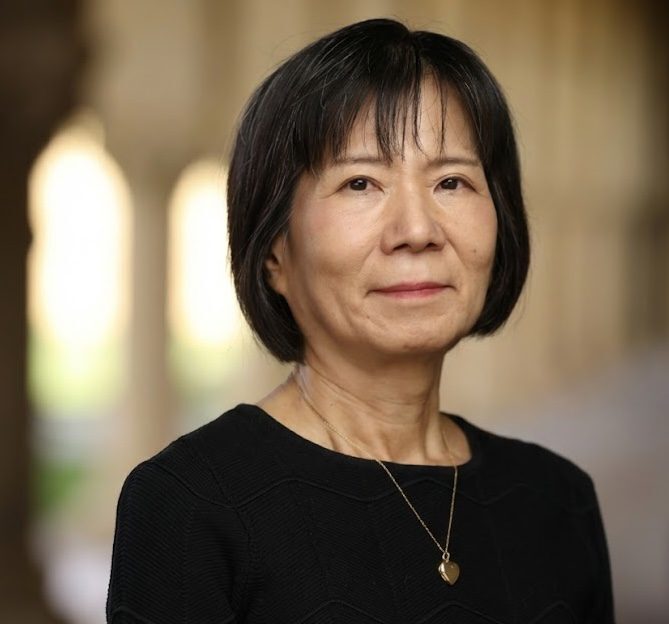
Miyako Inoue, Stanford University
Wed, 4/8 · 4:30 pm—6:00 pm · 202 Jones Hall
East Asian Studies Program


Based on ethnographic and archival research on the Record Department in the House of Representatives of Japan’s National Diet, this talk traces the institutionalization of parliamentary stenography from the opening of the Imperial Diet in 1890 to the present, in which automatic speech recognition has significantly changed stenographers’ everyday labor since the early 2010s. While the technologies of producing the proceedings have shifted from shorthand writing to audio recording and algorithmic transcription, what has remained universal is a professional commitment to carnal epistemic and ethical categories of “accuracy” and “fidelity.” I reconstruct how these categories historically emerged within the Diet’s stenographic apparatus and how they are materialized through the stenographers’ routinized practice across more than a century. The talk then draws on this empirical history to rethink “linguistic modernity” in Japan from its “other side.” The stenographer is a paradoxical modern figure–both antithetical to the modern speaking subject and a condition of its possibility. Stenographers produce text that are not theirs. They are neither author nor parrot, as stenographers would say. They are listeners rather than speakers, followers rather than origins. And their labor is synchronized to another’s temporality. This talk positions the stenographer as a privileged figure for theorizing linguistic modernity in Japan, stabilizing parliamentary speech as reproducible, quotable, attributable, and contestable evidence. Here, writing is the condition of audibility.