




Pulcinella in Arcadia
Karen T. Raizen, Bard College
September 25, 2025 · 4:30 pm—6:00 pm · 127 Corwin
Program in Italian Studies


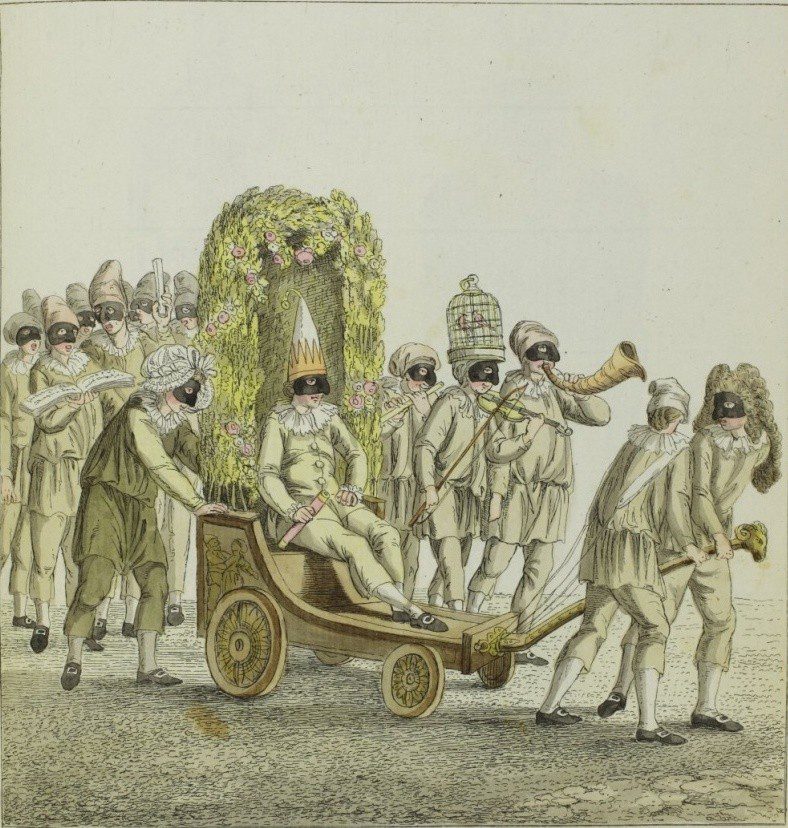
Pulcinella, the Neapolitan clown of the commedia dell’arte tradition, took to the streets in Rome in the seventeenth and eighteenth centuries. He was a star on popular stages, and a Carnival emblem for all to emulate. He also, in the early eighteenth century, climbed the Gianicolo hill, where a group of learned men had tried to set themselves apart from the city scene down below. This was the sede of the Arcadian Academy, the classicizing institution that shunned all things baroque, all things popular, all things grotesque.
My talk centers on the appearance of Pulcinella—the baroque king of the grotesque, the quintessentially popular figure—on the Arcadian stage. Carlo Sigismondo Capece, an upstanding Arcadian, wrote dozens of pulcinellate, or Pulcinella plays. Capece’s Pulcinella, as part of a Plautine lineage of food-obsessed parasites, consistently fumbles foreign words and recasts them in culinary terms. I argue that Capece deploys the Neapolitan zanni as a marker of linguistic difference, pointing to the misunderstandings and language barriers that, in Arcadian terms, defined the city and its vulgar populace. This talk is based on research from my recent monograph, Pulcinella’s Brood.