




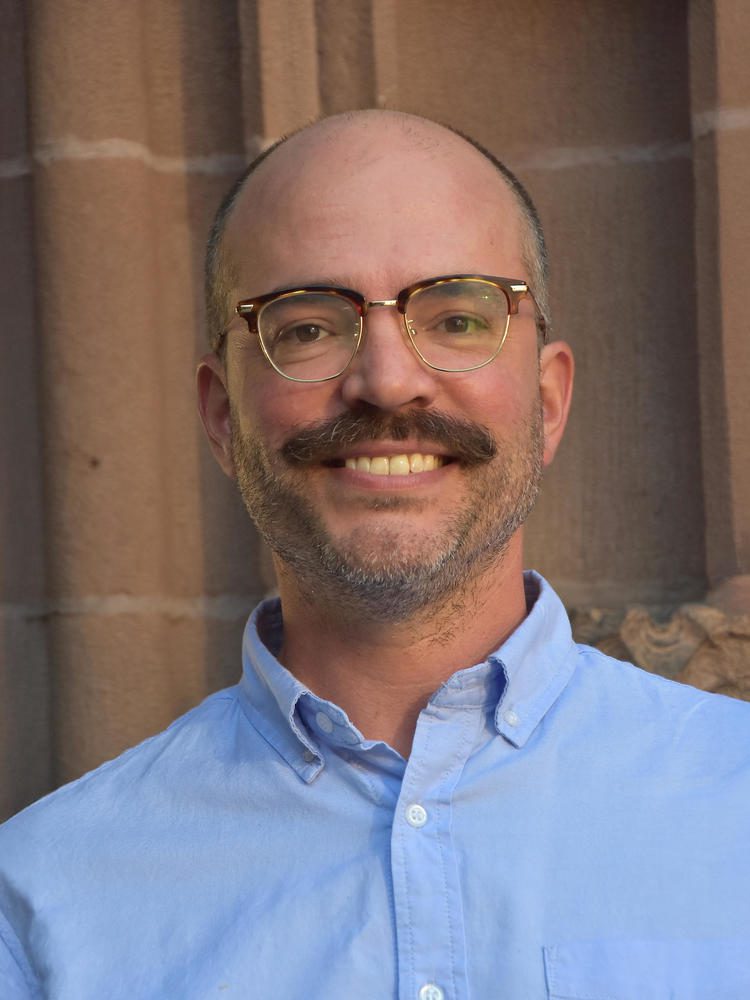
I grew up in Memphis before earning degrees in St. Louis (Washington University ’06) and northern California (Stanford ’12). Prior to coming to Princeton, I spent twelve years in the American Southwest at Arizona State University. I am a historian of the ancient Greek world with interests in political institutions, social conflict, the history of political thought, and applied social science methodologies. My graduate training included a Master’s degree in Political Science with a concentration in Comparative Politics so that I could pursue big-picture questions about democratization, authoritarianism, and populism across historical contexts and cultures.
My first book, (Princeton University Press, 2017), explored the phenomenon of oligarchy, or the “rule of the few,” and specifically how wealthy ruling elites designed institutions to keep themselves united and their subject populations divided. The study drew on so-called New Institutional approaches to authoritarian regimes in the Political Science literature in order to explain practices as diverse as fraudulent elections, targeted assassinations, patronage networks, and staged spectacles. While the example of Classical Athens was never far from my mind, I also drew upon evidence (textual, epigraphic, archaeological) from the broader Greek world, including Thebes, Corinth, Thasos, Rhodes, Samos, Sicyon, and Chios. The book won the Anglo-Hellenic League’s .
Since then I have been working on multiple projects, most centrally a political and cultural history of the practice of demagoguery in ancient Greece. This ongoing work has been generously supported by the National Endowment for the Humanities, the American School of Classical Studies at Athens, and the Center for Hellenic Studies in Washington, DC. A separate book, Ancient Greek Democracies, is forthcoming with Cambridge University Press’s “Key Themes in Ancient History” series; it offers a new synthetic overview of the characteristic institutions and ideology (but also the striking diversity) of democratic constitutions across the Greek world over the half-millennium from ca. 500 BCE to ca. 100 CE. I have also published articles in leading peer-reviewed journals on Greek local histories, the politics of ancient burial practices, newly published inscriptions on civil war and reconciliation, political representation in ancient democracies, and the nature of election in direct-democratic regimes. I maintain a keen interest in political science and the history of political thought and participate often in the annual meeting of the American Political Science Association.
I am currently developing several ideas for future projects. One is an analysis of how class perspectives and class struggle inform the practice of ancient Greek historiography. Another focuses on notions of governing, office-holding, and obedience beginning with Aristotle and continuing in the political thought of Hobbes, Rousseau, Marx, Arendt, and Abensour. Finally, I am fascinated by the reception of ancient ideas about the dēmos or “people” in late antique and medieval East Roman authors.
When not working on ancient history I enjoy cooking, hiking, and discovering new pizza places. I am an avid listener and adequate performer of live music and will never turn down an opportunity to discuss the Grateful Dead, professional wrestling, and/or horror films, all of them masterful exercises in the use of formulae on par with Homeric epic.