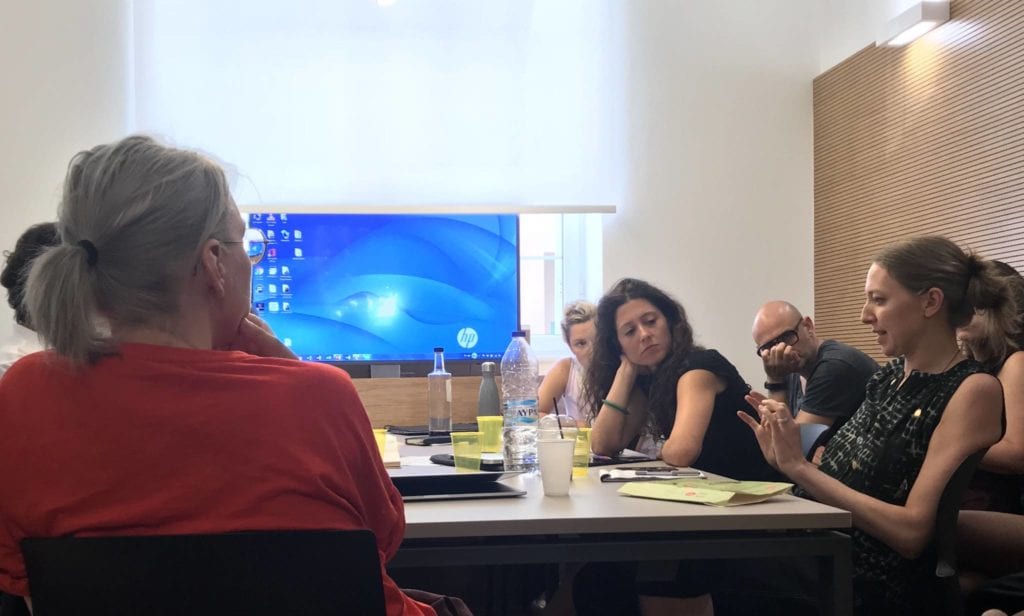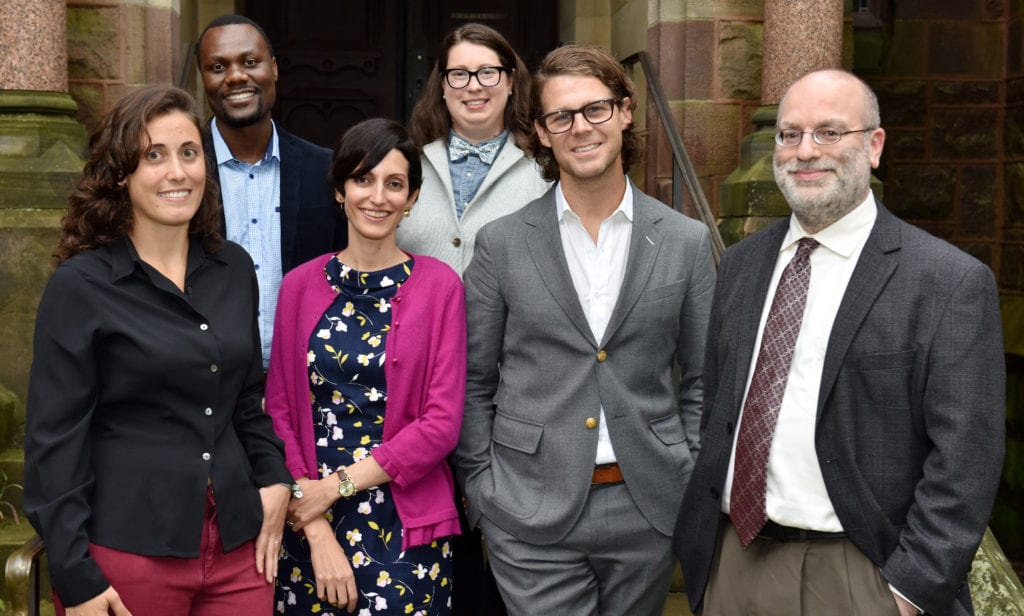
The Council of the Humanities was founded in 1953 to foster teaching, research and intellectual exchange. In close collaboration with departments and programs, it brings together faculty, students, guest scholars, writers and artists in a wide variety of venues. The Council also sponsors a broad range of courses in humanistic studies and in journalism.
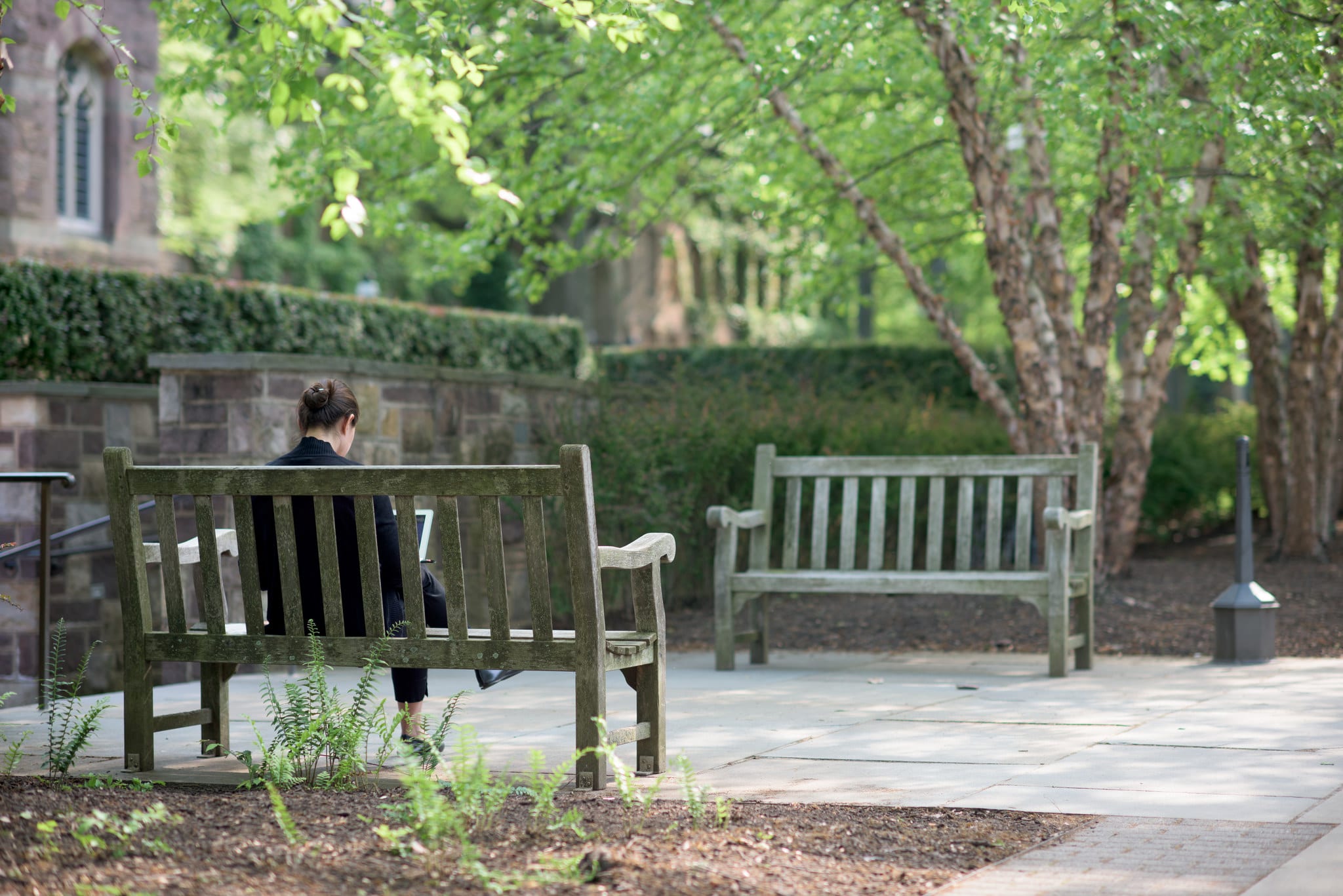
The Humanities Council is located in the Andlinger Center for the Humanities, named in honor of the generous benefactor, Gerhard R. Andlinger '52. The Center is a complex of four buildings at the heart of campus. The historic Joseph Henry House, once the home of the great physicist, is now the headquarters of the Humanities Council, the Society of Fellows and the Ferris McGraw Robbins Program in Journalism. The Scheide Caldwell House next door, a gift of William H. Scheide '36, brings together a wide array of interdisciplinary programs. East Pyne houses language and literature departments, while the Chancellor Green rotunda and café offer space for study, discussion and relaxation.
| Gideon Rosen |
Chair |
| Carol Rigolot |
Executive Director |
| Cass Garner |
Department Manager |
| Lin DeTitta |
Program Manager |
| Susan Coburn |
Office Coordinator |
Fellows on campus for the semester
Thanassis Cambanis *2000 has reported on the Arab world for the New York Times and the Boston Globe, and is currently writing a book on Shi'ite sectarianism in Iraq and Lebanon. He
is teaching a course on writing about war. Cambanis holds a Master's degree in public policy from the Woodrow Wilson School.
Rita Copeland spans classical studies, religion, English and comparative literatures. A medievalist at the University of Pennsylvania and co-editor of New Medieval Literature, she
has explored the relation between the study of language and philosophy in medieval universities and the development of dissent and heresy outside the university.
Barton Gellman '82, special reports reporter for the Washington Post, has also been diplomatic correspondent and Jerusalem bureau chief. His recent book, Angler, describes Vice President Cheney's role in crafting American policy. Gellman is teaching investigative reporting.
Kathy Kiely '77, Washington correspondent for USA Today, leading a seminar on new media. She covered the 2008 presidential election.
Riley Lee, artist, ethnomusicologist and teacher of Japanese culture, is the first non-Japanese to attain the rank of grand master in the traditional Japanese flute, or shakuhachi. He is team-teaching a course on the cultural history of Japanese music, with a strong
hands-on component.
Leonid Maximenkov, scholar of Russian politics, culture and economics, is a Fellow all year. His spring-term course examines Soviet censorship of the arts and culture.
Giuseppe Mazzotta of Yale University is a specialist on Dante, but his publications extend to Boccaccio, Petrarch, Vico and what he calls "Cosmopoiesis," a Renaissance experiment. He is teaching a course on Renaissance Italian writers and thinkers.
Claudia Roth Pierpont, staff writer for the New Yorker, is teaching a seminar on writing about culture.Her remarkable book Passionate Minds: Women Rewriting the World was a finalist for the National Book Critics Circle Award.
Elisabeth Rosenthal M.D. broke the Chinese AIDS story and covered SARS (as well as the 2004 presidential election) for the New York Times. Her course explores how so-called science stories, from global warming and bird flu epidemics to health care reform, affect politics and the world economy.