




Apollopop
Dieter Gunkel, University of California, Los Angeles
Thu, 11/6 · 4:30 pm—6:00 pm · 161 East Pyne
Department of Classics; Department of Linguistics


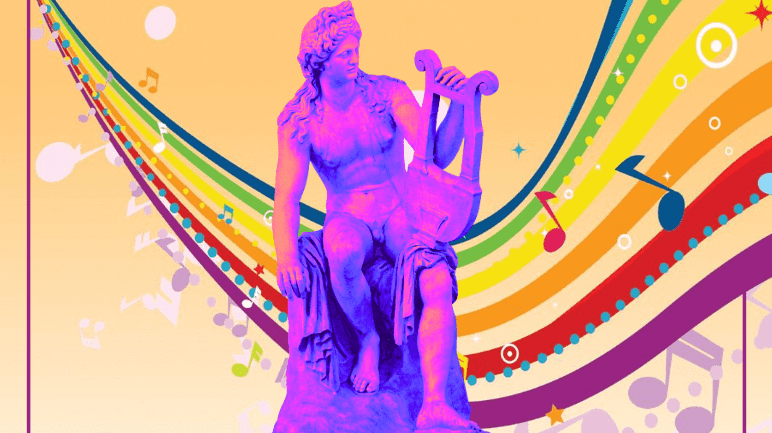
It has been clear since the 1890s that some pieces of ancient Greek vocal music display a correlation between the melody that is inherent in the text, on the one hand, and the melody to which is it sung, on the other. The Delphic hymns (127 BCE) provide the fullest picture of that phenomenon. For example, there is good, non-musical evidence that the circumflex accent marked a high-to-low fall in linguistic tone. Correspondingly, in the Delphic hymns, circumflected syllables are usually sung to a two-note falling interval. In other words, linguistic tone and musical melody usually fall in parallel.
Nineteenth century scholars (Crusius, Wackernagel) made three astute generalizations about the correlation, e.g. that the accented syllable of a word is sung at least as high as any of its other syllables. With a few interesting exceptions, little has been added since. Current handbook treatments of the topic essentially consist of those three rules.
Outside of Classics, from the early twentieth century onward, scholars have studied similar phenomena in other traditions of vocal music including Cantonese pop music (Cantopop), Vietnamese “new music,” Tommo So folk song, and many more. Especially in recent decades, that work has yielded valuable insights about the nature of tone-melody matching and raised questions for further study.
My presentation considers tone-melody matching in the Delphic hymns against the typological backdrop provided by those other traditions. I suggest ways in which (a) they can guide us to a more sophisticated understanding of text-setting in ancient Greek vocal music and (b) Greek can contribute to our understanding of how tone-melody matching works in general.